
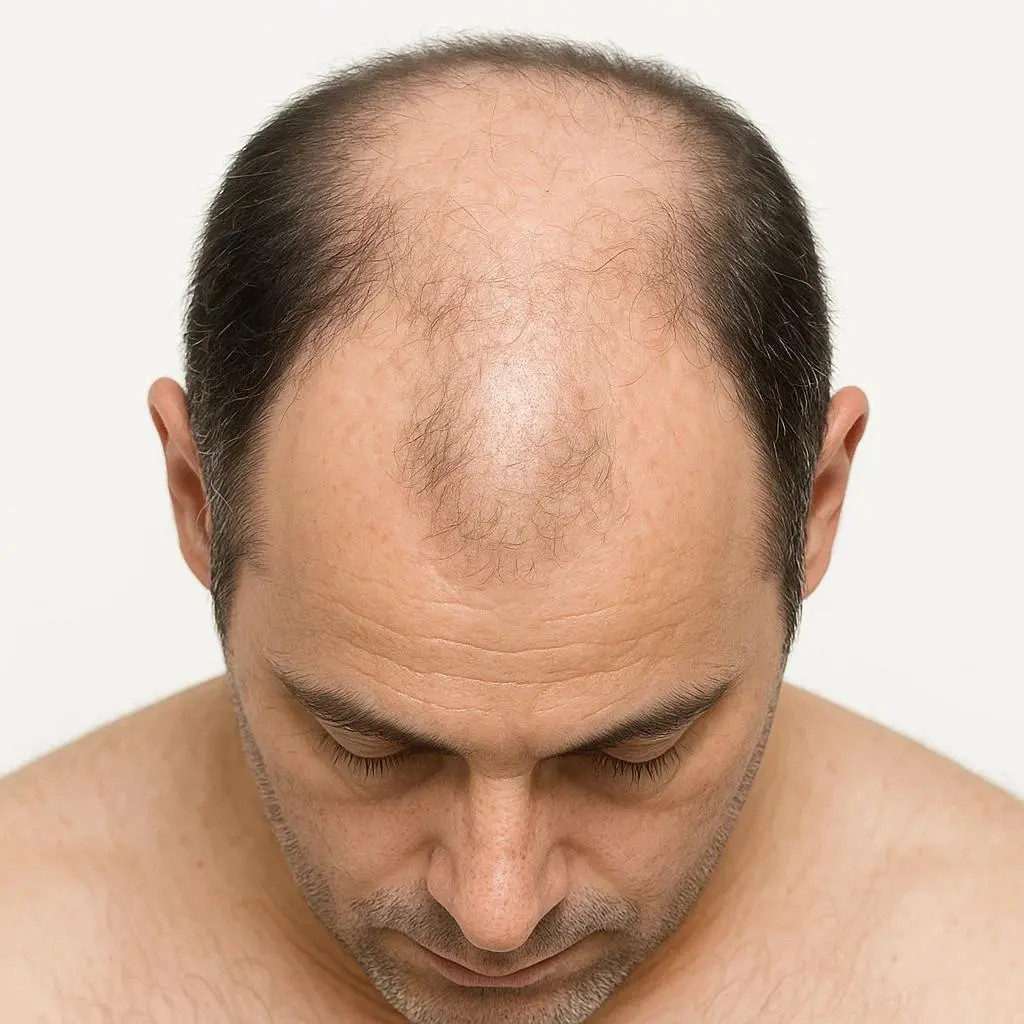
Hair thinning and hair loss can develop gradually or appear unexpectedly. For some people, it begins with a receding hairline. Others notice a widening hair part, increased shedding, or less hair density around the crown.
Platelet-rich plasma (PRP) treatment has become an increasingly discussed option for certain types of hair loss. But does PRP actually help hair grow, and is it suitable for everyone?
The short answer is that PRP may improve hair density and reduce hair loss in some people, particularly those with androgenetic alopecia (pattern hair loss). However, results vary, research has limitations, and PRP is not a guaranteed or permanent cure for baldness.
Understanding the available evidence, causes of hair loss, treatment process, and possible risks can help you decide whether PRP is worth discussing with a qualified healthcare professional.
What Is PRP Treatment for Hair Loss?
PRP stands for platelet-rich plasma, a preparation obtained from a person’s own blood.
Blood contains several components, including red blood cells, white blood cells, plasma, and platelets.
Platelets are best known for their role in blood clotting, but they also release growth factors involved in normal tissue repair and biological signaling.
During PRP preparation, a blood sample is processed to concentrate platelets within a portion of the plasma.
This preparation may then be injected into selected areas of the scalp as part of a clinical hair-loss treatment plan.
Researchers have investigated whether platelet-derived growth factors may influence hair follicle activity and improve measures such as hair density.
However, PRP preparations are not all identical. The platelet concentration, processing technique, and treatment schedule can differ between clinics and research studies.
These differences help explain why treatment outcomes are not always consistent.
Does PRP Really Work for Hair Loss?
Research suggests that PRP may be beneficial for certain people with pattern hair loss, but the evidence does not support guaranteed results.
A systematic review and meta-analysis published in 2025 examined 43 randomized controlled trials involving 1,877 participants.
The researchers reported improvements in some outcomes, including hair density and reduced hair loss, while identifying substantial variations in PRP preparation methods and study designs.
The analysis did not establish a consistent improvement in every hair-related measurement.
Earlier reviews also reported promising results in some patients with androgenetic alopecia, but noted limitations including differences in treatment protocols and study quality.
What Does This Mean for Patients?
The findings suggest three practical points:
- PRP may help some people: Particularly selected patients with pattern hair loss and remaining hair follicles.
- Improvement is not guaranteed: Some people experience measurable benefits, while others notice little or no meaningful change.
- Diagnosis matters: Different forms of hair loss require different treatment approaches.
PRP should be viewed as one possible treatment option, not a universal solution.
A professional assessment is necessary to determine whether it is appropriate for your particular condition.
Who May Benefit From PRP Hair Treatment?
PRP has been most widely studied for androgenetic alopecia, also known as male or female pattern hair loss.
However, not every patient with this diagnosis will respond similarly.
1. Men With Pattern Hair Loss
Male pattern hair loss commonly causes thinning around the temples, frontal hairline, or crown.
It is influenced by genetic and hormonal factors and often progresses gradually.
Some men with androgenetic alopecia may experience improvements in hair density after PRP treatment.
The potential response depends on factors such as the stage of hair loss, remaining follicles, individual characteristics, and treatment protocol.
PRP cannot reliably recreate hair follicles that are no longer functioning.
Men with advanced baldness may need to discuss alternative or additional treatment options.
2. Women With Pattern Hair Loss
Female pattern hair loss frequently appears as gradual thinning across the central scalp or a widening hair part.
Research has investigated PRP as a possible treatment for selected women with androgenetic alopecia.
Some studies have reported improvements in hair density, but results vary.
Hair loss in women can also be associated with other medical conditions, nutritional issues, medications, and hormonal changes.
Identifying the cause is important before recommending treatment.
3. People With Early Hair Thinning
People experiencing early hair thinning may still have a substantial number of functioning hair follicles.
Some may be candidates for PRP after an appropriate diagnosis.
However, early thinning can result from many different conditions.
A person with temporary shedding due to illness, nutritional deficiency, or another underlying cause may need a different treatment approach.
PRP should not be selected simply because hair shedding has started.
4. People With Other Hair-Loss Conditions
PRP has also been investigated for some additional forms of alopecia.
However, supporting evidence is not equally strong across different diagnoses.
People experiencing sudden patchy hair loss, scalp pain, significant inflammation, scarring, or rapid hair shedding should seek appropriate medical evaluation.
These symptoms may indicate conditions requiring specific medical treatment.
PRP should not delay diagnosis or treatment of an underlying scalp disorder.
Who May Not Be Suitable for PRP Hair Treatment?
PRP is not appropriate for everyone.
A qualified practitioner should review your medical history before recommending the procedure.
Factors that may affect suitability include:
- Certain bleeding or platelet disorders
- Abnormal blood counts
- Active infections
- Significant scalp inflammation
- Some medical conditions affecting healing
- Medications that influence bleeding
- Pregnancy or breastfeeding considerations
- Other procedure-specific contraindications
A practitioner may recommend additional evaluation or a different treatment approach.
Do not stop or change prescribed medications without consulting your treating healthcare professional.
How Is PRP Hair Treatment Performed?
The exact procedure depends on the clinical system, PRP preparation method, and treatment plan.
Generally, the process includes the following stages.
Step 1: Hair and Scalp Assessment
The practitioner discusses the pattern and duration of hair loss, reviews relevant medical history, and examines the scalp.
Further assessment may be recommended to identify the underlying cause.
Step 2: Blood Sample Collection
If treatment is appropriate and the patient provides informed consent, a blood sample is collected using suitable medical equipment.
Step 3: PRP Preparation
The blood is processed, commonly using a centrifuge, to obtain a platelet-rich plasma preparation.
Different preparation systems may produce products with different characteristics.
Step 4: Scalp Administration
The prepared PRP is administered into selected scalp areas according to the treatment plan.
The procedure may cause temporary discomfort or tenderness.
Step 5: Aftercare and Follow-Up
The patient receives instructions covering scalp care, expected reactions, possible complications, and follow-up appointments.
The treating practitioner should explain the actual procedure and preparation protocol before treatment.
How Many PRP Sessions Are Usually Needed?
There is no single treatment schedule that works for everyone.
Some commonly used protocols involve an initial series of treatments, followed by reassessment and possible maintenance sessions.
The American Academy of Dermatology describes commonly used schedules involving monthly treatments initially and additional appointments at longer intervals.
However, the appropriate number of sessions depends on the diagnosis, PRP preparation method, practitioner assessment, and individual response.
More sessions do not automatically guarantee better results.
Before committing to a treatment series, ask why the recommended schedule is appropriate and how progress will be evaluated.
How Long Does It Take to See PRP Hair Results?
PRP does not produce immediate hair regrowth.
Hair growth follows a biological cycle, and meaningful changes may take several months to evaluate.
Some people notice changes in shedding before observing differences in hair density, while others do not experience a noticeable improvement.
In research studies, hair-related outcomes are commonly assessed over several months.
The actual response can vary according to:
- Type and stage of hair loss
- Existing follicle activity
- PRP preparation technique
- Number and spacing of sessions
- Individual biological factors
- Other hair-loss treatments being used
Consistent scalp photographs and appropriate clinical measurements may help assess progress.
No clinic can reliably guarantee a specific number of new hairs or a fixed timeframe for regrowth.
Is PRP Hair Treatment Permanent?
No. PRP is not a permanent cure for the underlying causes of pattern hair loss.
Androgenetic alopecia can continue to progress over time.
Some patients may be advised to consider follow-up or maintenance treatment, depending on the response and diagnosis.
However, the long-term effectiveness and ideal maintenance schedule are not established for every PRP protocol.
A treatment plan should account for realistic outcomes, ongoing management needs, and overall cost.
Can PRP Regrow Hair on a Completely Bald Scalp?
PRP cannot reliably create new functioning hair follicles in areas where they are absent.
Treatment may have a greater potential role in selected areas with existing follicles affected by certain hair-loss conditions.
Someone with advanced hair loss may need to explore other approaches, including medically appropriate hair-loss treatment or hair transplantation.
PRP should not be advertised as a guaranteed replacement for hair transplant surgery.
PRP vs. Other Hair-Loss Treatments
PRP is one of several approaches that may be considered after diagnosing hair loss.
| Treatment | Main purpose | Important consideration |
| PRP | Platelet-derived scalp treatment investigated for selected hair-loss conditions | Benefits vary by diagnosis and protocol |
| Topical minoxidil | Medication used for certain types of hair loss | Requires appropriate and consistent use |
| Prescription oral treatments | May be recommended for selected diagnoses | Require assessment of indications, risks, and contraindications |
| Hair transplantation | Relocates hair follicles to selected areas | Surgical procedure requiring suitable donor hair |
| Treatment of underlying conditions | Addresses causes such as nutritional or medical disorders | Depends on identifying the diagnosis |
PRP does not automatically outperform established treatments.
A 2026 meta-analysis comparing PRP with topical minoxidil did not demonstrate a clear advantage for PRP in several important hair-growth outcomes.
For some patients, an appropriately selected conventional treatment may be more suitable than PRP.
Can PRP Be Combined With Other Hair-Loss Treatments?
Some clinicians consider PRP alongside other treatments for appropriately diagnosed hair-loss conditions.
However, combination treatments should not be selected without considering the evidence, individual health circumstances, and potential risks.
A qualified practitioner can explain whether a combined approach is appropriate.
PRP should not replace necessary medical treatment for underlying causes of hair loss.
PRP Hair Treatment Side Effects and Risks
Because PRP treatment involves blood collection and scalp injections, side effects and complications are possible.
Common temporary effects may include:
- Scalp tenderness
- Injection-site discomfort
- Minor bleeding or bruising
- Swelling
- Redness
- Temporary headache or sensitivity
More serious complications, including infection or injury related to the procedure, are possible.
Using the patient’s own blood does not make the procedure risk-free.
Appropriate infection-control practices, sterile equipment, blood handling, and practitioner qualifications are essential.
Seek medical attention if you develop worsening pain, spreading redness, fever, or other concerning symptoms following treatment.
What Should You Ask Before Booking PRP Hair Treatment?
Before deciding whether PRP is appropriate, consider asking the treating practitioner:
- What is the likely cause of my hair loss?
- Is PRP supported by evidence for my diagnosis?
- What preparation method and equipment will be used?
- What realistic improvement might be possible?
- What risks or contraindications apply to me?
- Are there more appropriate alternatives?
- How many sessions are being proposed, and why?
- What is the total expected cost?
- How will treatment outcomes be assessed?
Clear answers can help you make an informed decision.
PRP Hair Treatment in Peshawar: What Should You Consider?
If you are exploring PRP treatment for hair loss in Peshawar, choosing a provider should involve more than comparing prices.
Look for an appropriately qualified practitioner who can identify the likely cause of hair loss, explain the evidence, discuss treatment alternatives, and provide clear safety information.
The clinic should also be able to describe its blood-handling procedures, PRP preparation system, and treatment-related risks.
Mayo Beauty & Aesthetic offers PRP hair treatment consultations in Hayatabad, Peshawar.
Its published service menu lists PRP Hair Treatment at Rs. 6,000. Confirm whether this covers one session and whether consultation or additional charges apply before booking.
Frequently Asked Questions
Does PRP really regrow hair?
PRP may improve hair density in some patients with certain forms of hair loss, particularly pattern hair loss. However, it does not guarantee regrowth and cannot reliably restore follicles that are no longer functioning.
Does PRP work for female hair loss?
PRP has been studied in women with androgenetic alopecia, with some studies reporting improvements. Suitability depends on an accurate diagnosis and individual assessment.
Is PRP better for early hair loss?
Some people with early pattern hair loss may be candidates for PRP. However, the underlying condition and presence of functioning follicles matter more than simply how recently thinning began.
Can PRP permanently stop hair loss?
No. PRP does not permanently cure androgenetic alopecia or guarantee that future hair loss will stop.
How many PRP sessions are needed?
The appropriate treatment schedule varies. Some protocols involve multiple initial sessions and reassessment, but there is no universally effective number.
Is PRP safe for everyone?
No. Certain medical conditions, medications, infections, and blood-related disorders may make PRP unsuitable or require further assessment.
Is PRP painful?
Blood collection and scalp injections may cause discomfort, tenderness, or temporary sensitivity. Experiences vary between individuals.
Is PRP better than a hair transplant?
PRP and hair transplantation serve different purposes. Neither is automatically the better option for every person. The choice depends on the diagnosis, stage of hair loss, and individual treatment goals.
What is the cost of PRP hair treatment in Peshawar?
Mayo Beauty & Aesthetic publishes a price of Rs. 6,000 for PRP Hair Treatment. Confirm the current charges and whether they apply per session.
Final Thoughts: Is PRP Worth Considering for Hair Loss?
PRP may be worth discussing with a qualified healthcare professional if you have a diagnosed form of hair loss for which platelet-rich plasma treatment has supporting evidence.
Research suggests possible improvements in hair density for some patients, particularly those with pattern hair loss.
However, the results are variable, treatment protocols differ, and PRP is not appropriate for every cause of hair loss.
The most useful first step is to understand why hair loss is occurring and which available treatments best fit your circumstances.
Considering PRP Hair Treatment in Peshawar?
Mayo Beauty & Aesthetic offers PRP hair treatment consultations in Hayatabad, Peshawar.
If you would like to learn more about available procedures, treatment requirements, and pricing, visit our dedicated Hair PRP service page or contact our team.
Mayo Beauty & Aesthetic
Location: Hayatabad Phase 4, opposite Hayatabad Medical Complex, Peshawar, Pakistan
Phone / WhatsApp: 0300-6199777